From Physical Part to Manufacturing-Ready CAD: Reverse Engineering a Marine Impeller

One of the most valuable applications of reverse engineering is turning existing physical components back into usable digital assets.
This project involved a marine impeller that the client wanted digitally reconstructed for future manufacturing.
The objective was straightforward:
Capture the geometry of the existing component, recreate it as an editable CAD model, validate the design through a physical prototype, and provide manufacturing-ready data that could support future tooling and mould production.
Like many reverse engineering projects, the challenge wasn't creating something new.
It was accurately preserving and reconstructing something that already existed.
Starting With a Physical Component
The project began with the original impeller.
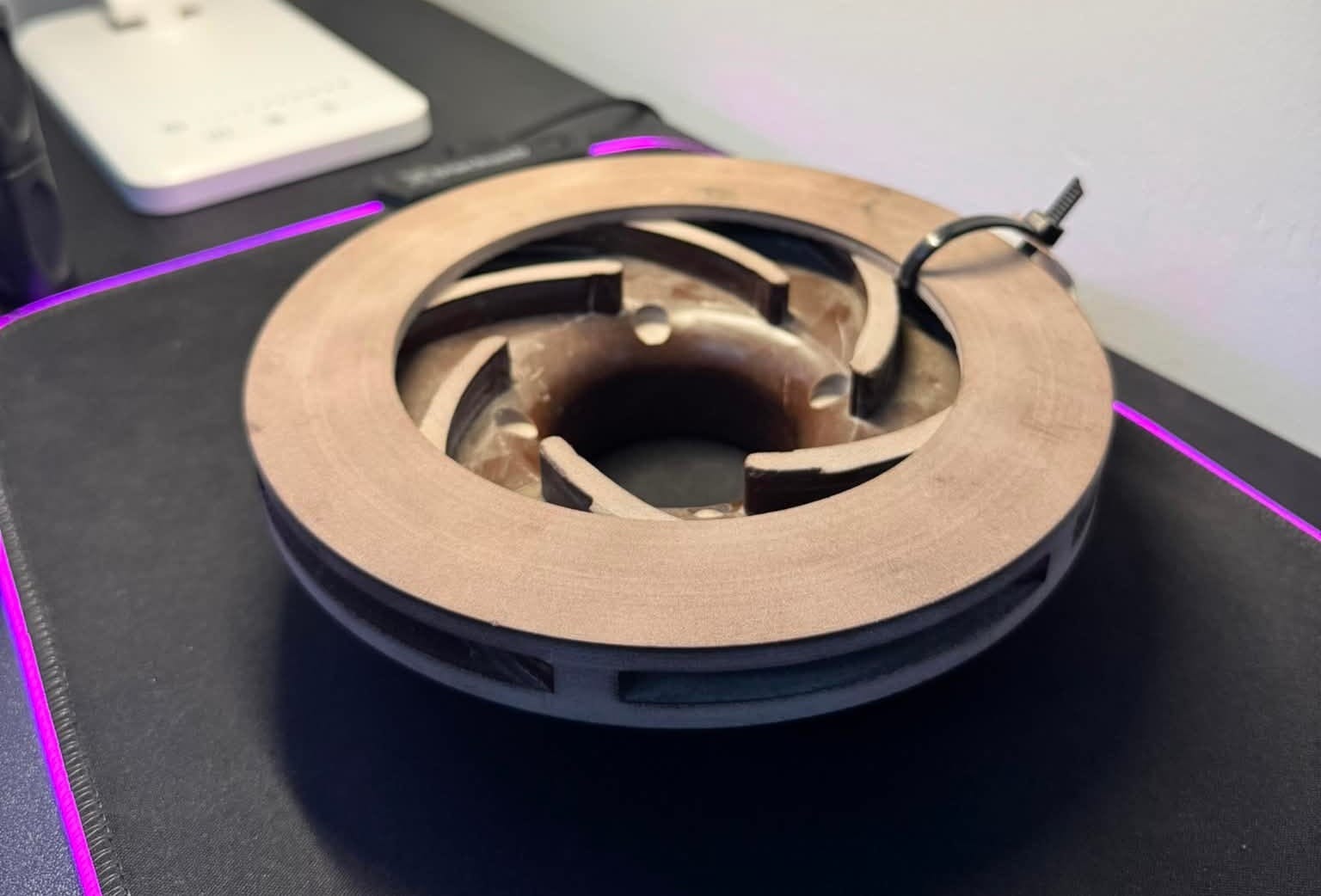
While the physical part contained all of the geometry required for manufacturing, there was no editable CAD model available that could be used for design changes, tooling development, or future production.
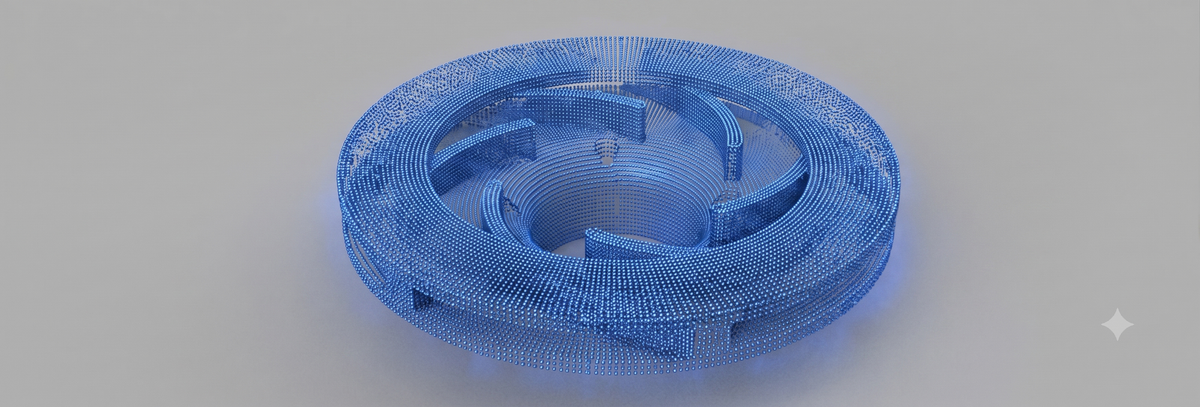
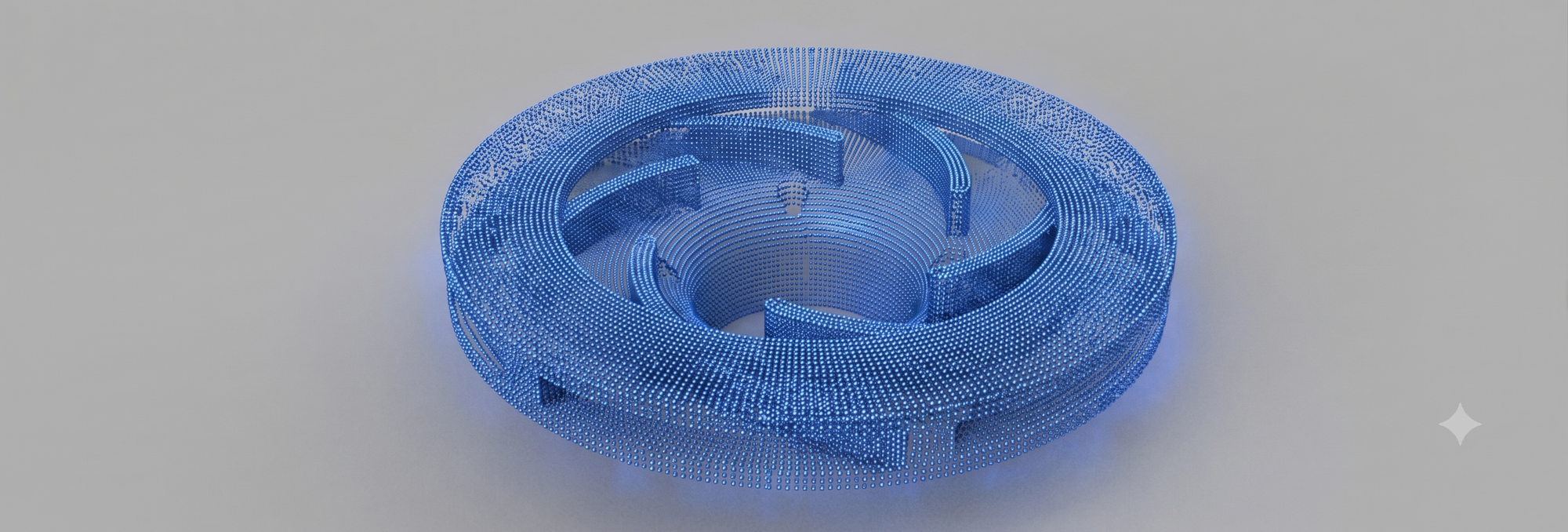
To begin the reconstruction process, we first captured the geometry using 3D scanning.
The scan generated a dense point cloud representing the surface of the impeller.
At this stage, the data accurately represented the physical part, but it was not yet suitable for engineering workflows.
The point cloud needed to be processed and converted into a usable digital model.
From Scan Data to Geometry
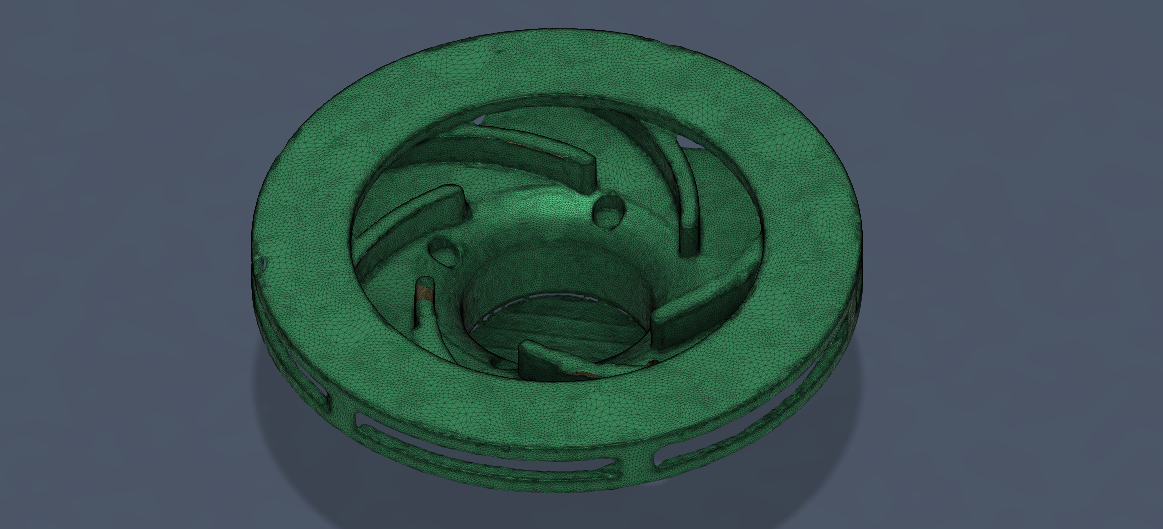
The captured point cloud was converted into a mesh model, creating a digital representation of the impeller's surface geometry.
Mesh data is extremely useful for visualisation and dimensional reference, but it presents limitations when used directly for manufacturing and engineering applications.
To create a truly useful digital asset, the geometry needed to be rebuilt within CAD.
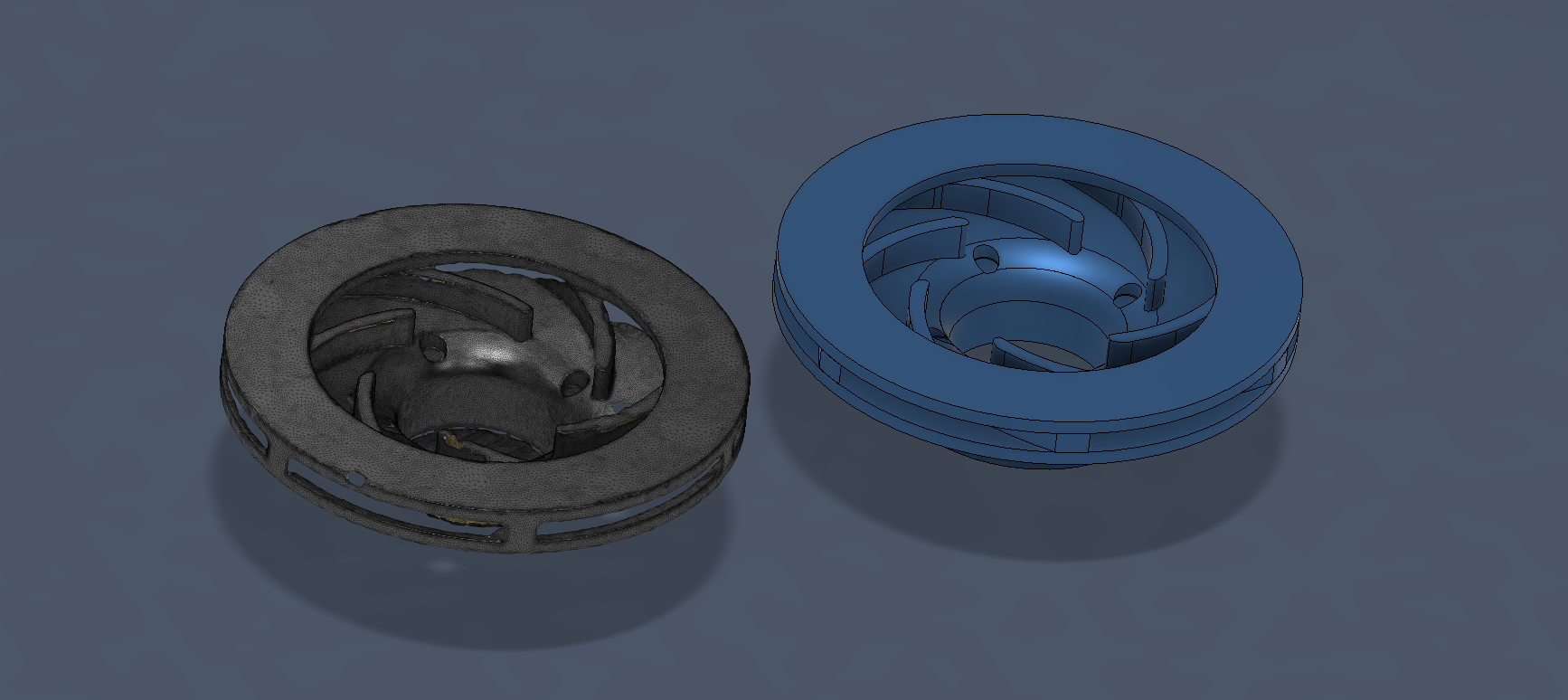
Using the mesh as a reference, the impeller was reverse engineered into a fully parametric CAD model.
This process involved recreating the critical geometry, surfaces, blade profiles, and dimensional relationships that defined the original component.
The result was not simply a copy of the mesh.
It was a clean, editable engineering model suitable for future modification, manufacturing, and tooling development.
Creating a Manufacturing-Ready STEP File
Once the CAD reconstruction was complete, the final geometry was exported as a STEP file.
This is often one of the most valuable outcomes of a reverse engineering project.
Unlike mesh formats, STEP files can be opened, edited, and used across a wide range of engineering, tooling, and manufacturing software.
For the client, this meant the impeller now existed as a usable digital asset rather than solely as a physical component.
The geometry could be used for:
- tooling and mould development
- manufacturing preparation
- future design modifications
- replacement part production
- long-term digital archiving
Validating the Design
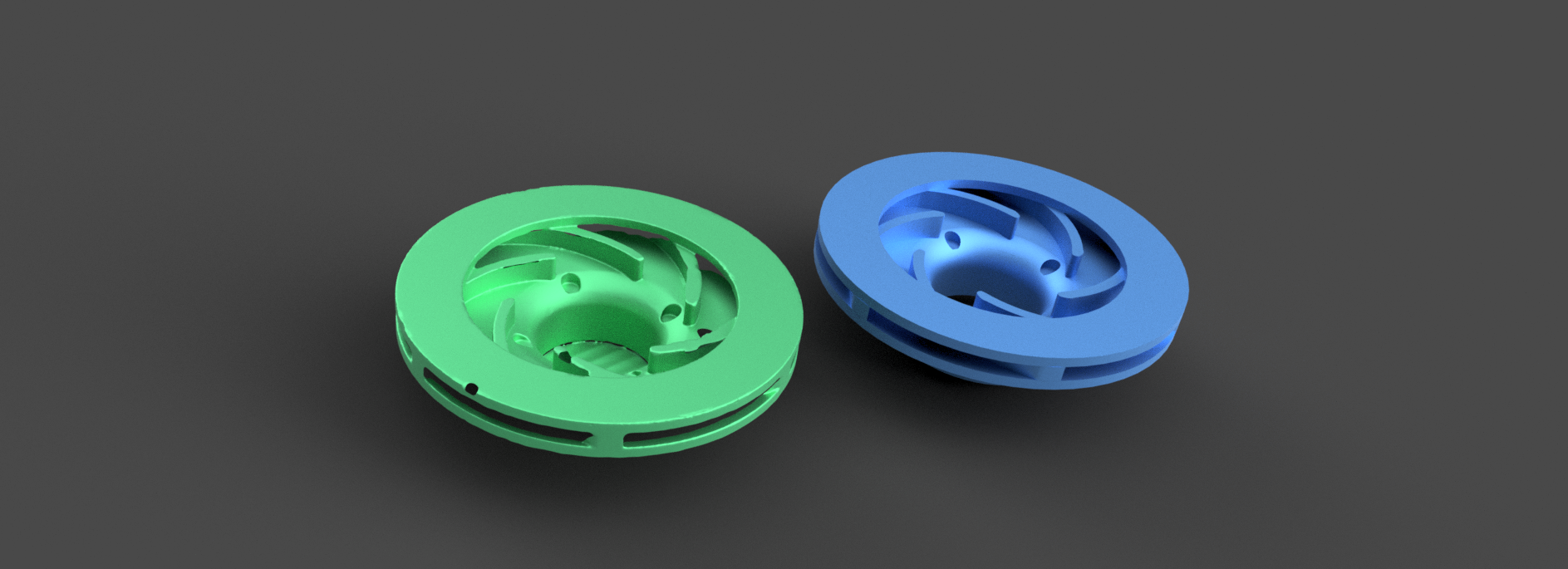
Before progressing toward manufacturing, the client wanted to verify that the reconstructed geometry accurately represented the original part.
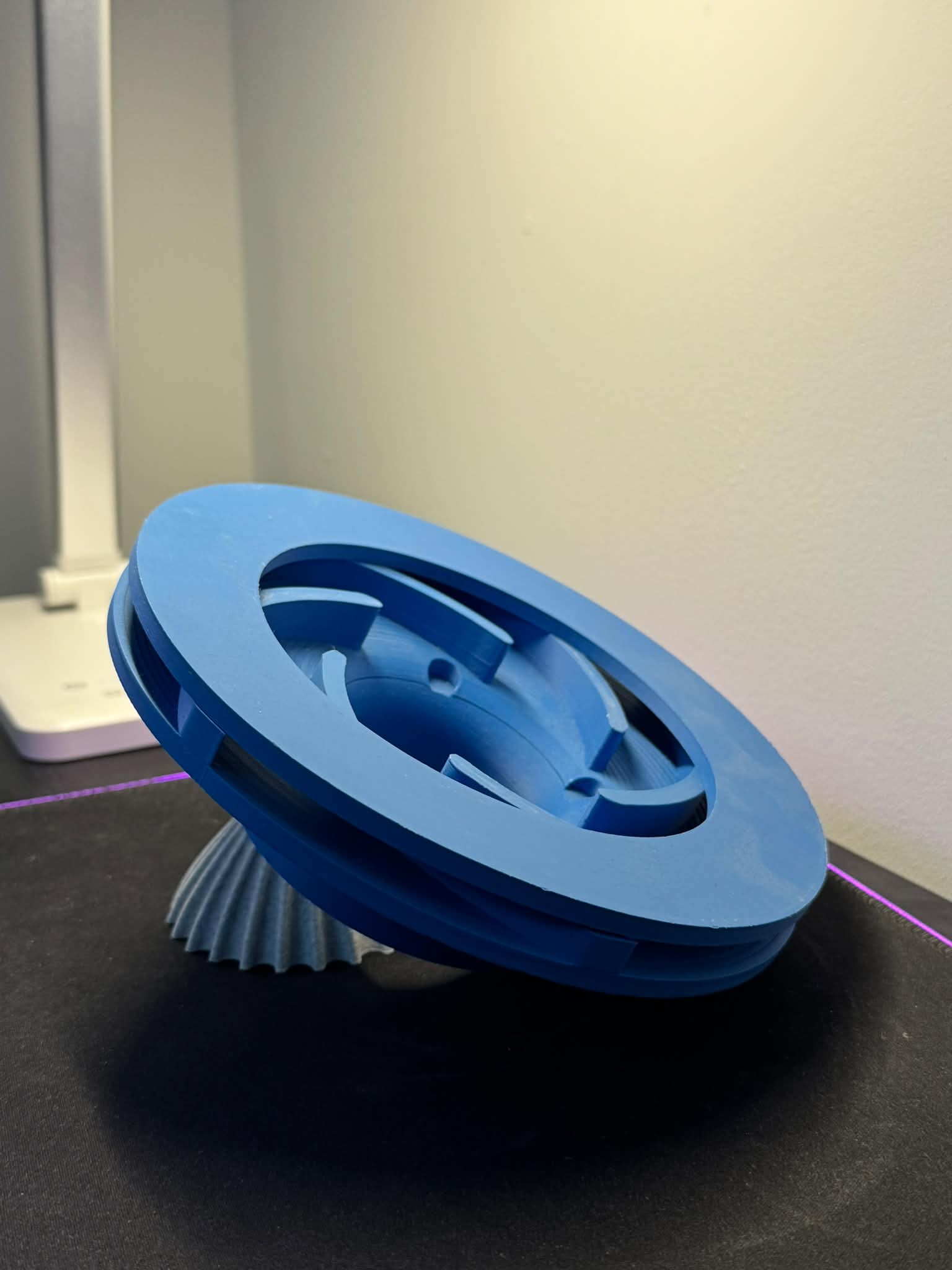
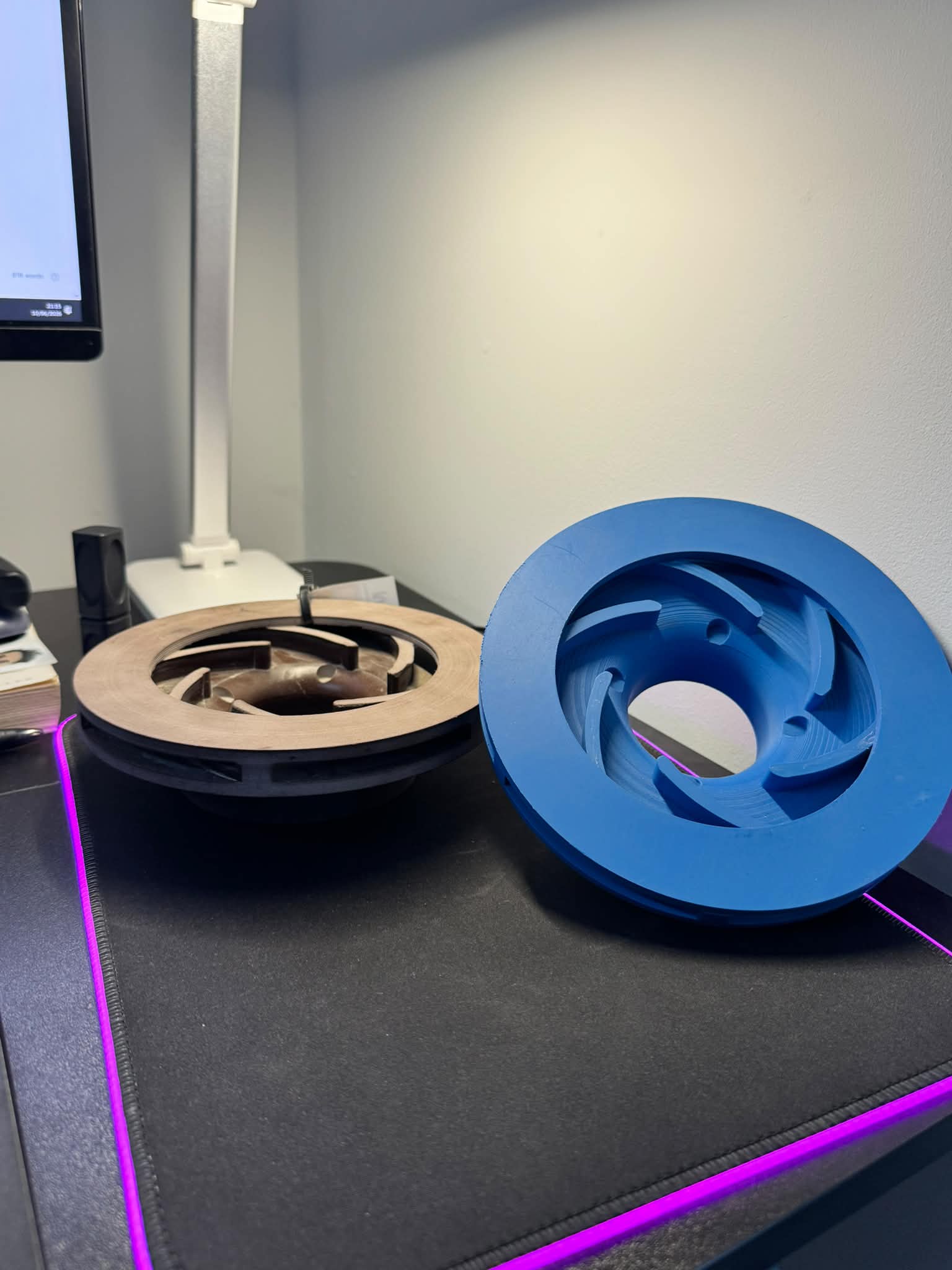
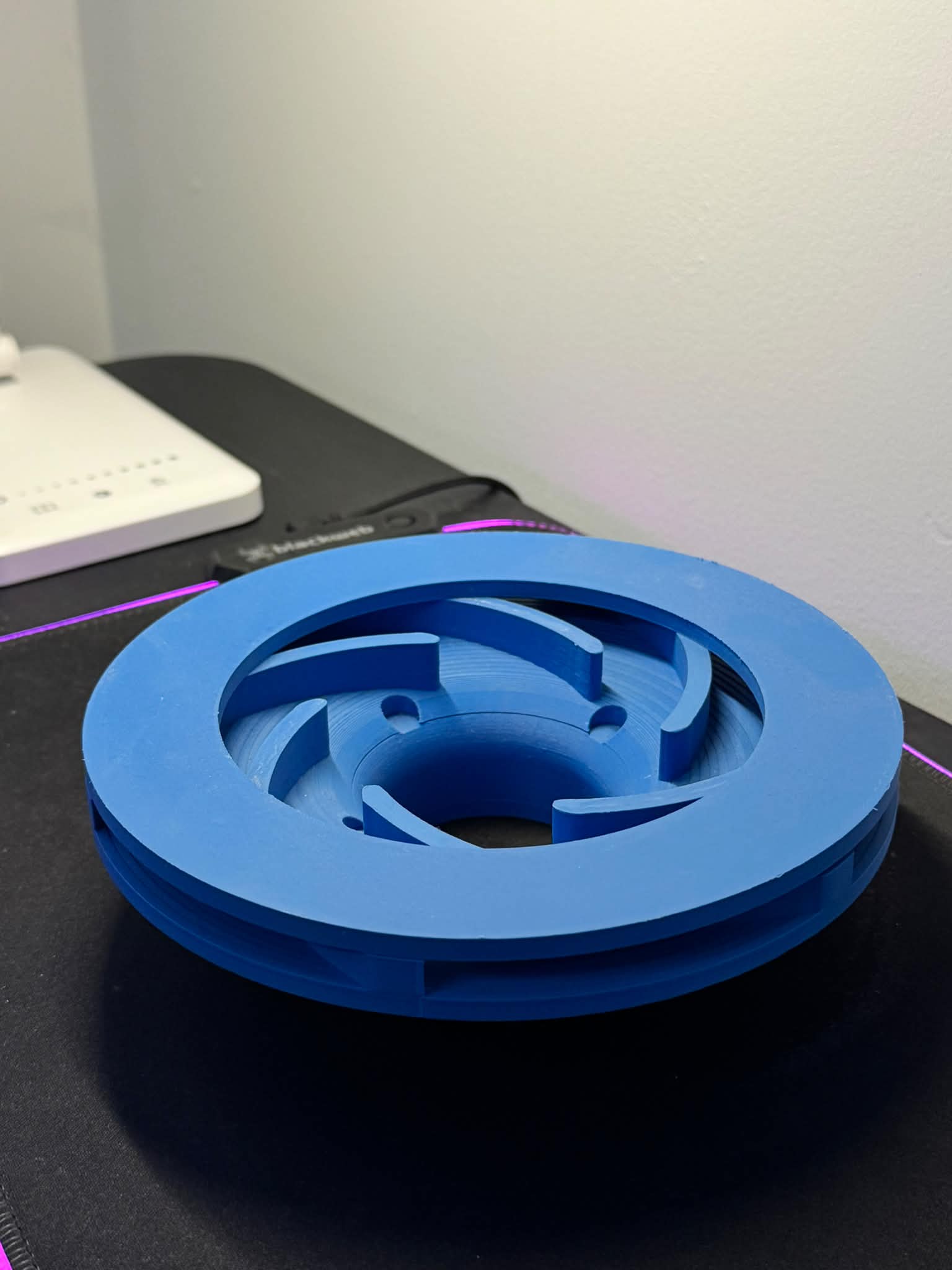
To support this, we produced a full-scale 1:1 prototype using additive manufacturing.
The prototype allowed the client to physically assess:
- fitment
- overall geometry
- assembly interfaces
- dimensional accuracy
This validation stage provided confidence that the reconstructed CAD accurately reflected the original component before further investment was made into tooling and production.
Reflections
Projects like this highlight the importance of reverse engineering as a bridge between physical products and digital manufacturing workflows.
Many industries still rely on components that exist only as physical parts, legacy drawings, or undocumented designs.
Without usable digital data, manufacturing, maintenance, modification, and replacement become increasingly difficult.
By combining 3D scanning, mesh processing, CAD reconstruction, and rapid prototyping, it becomes possible to transform those physical components into modern engineering assets that can be used throughout the entire product lifecycle.
In this case, the final deliverable wasn't simply a prototype or a scan.
It was the creation of a complete digital foundation for future manufacturing.
A physical component became a manufacturing-ready digital asset.
And that's often where the real value of reverse engineering begins.