From Prompt to Prototype
One of the things we enjoy most at Stellerworks is working on projects that sit somewhere between engineering, storytelling, and physical product design.
This project with Bench AI was a good example of that.
Bench is a startup focused on automating engineering workflows using AI — a space we already find incredibly interesting ourselves — so when the opportunity came up to create a custom physical object for the company, it immediately felt like the kind of project we wanted to explore.
The idea was simple:
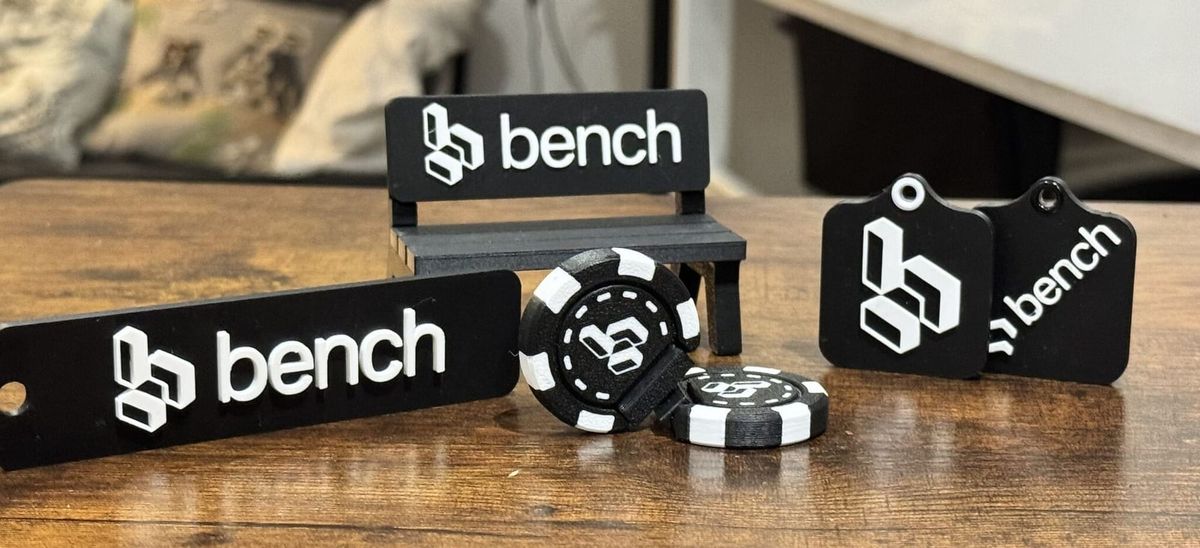
Create a miniature physical “bench” that could act as a memorable desk object for early employees, investors, and people connected to the company’s journey.
Part gift.
Part conversation piece.
Part physical representation of the brand itself.
From Idea to Object
Like many projects, the process began quickly and experimentally.
One of the most interesting parts of this workflow was how heavily AI-assisted tools shaped the early concept phase.
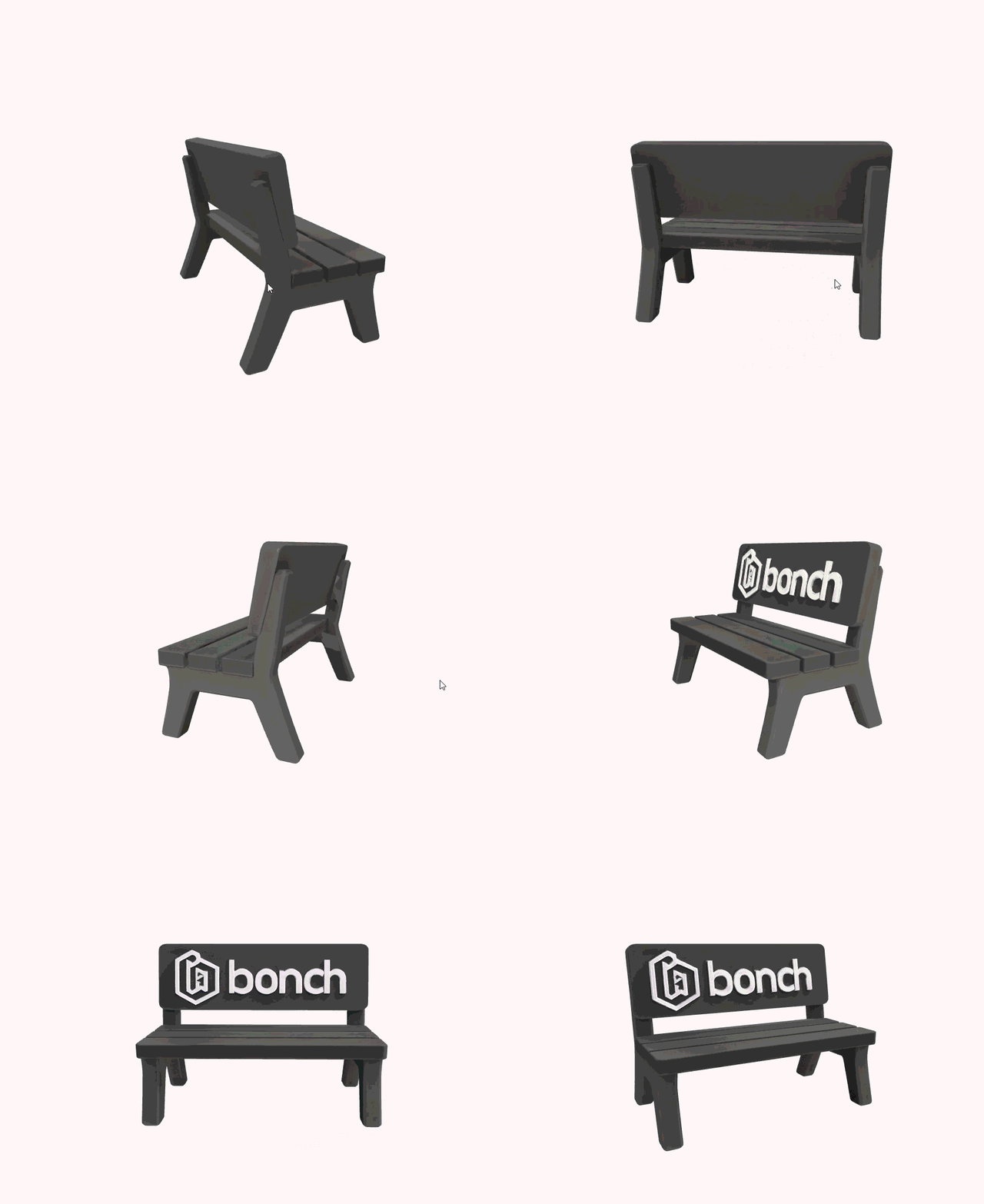
Before moving into CAD, we used ChatGPT image generation to rapidly explore visual directions and generate realistic concept renders of what the miniature bench could look like. This allowed the team at Bench to immediately visualise the idea in a much more tangible way than sketches or descriptions alone.
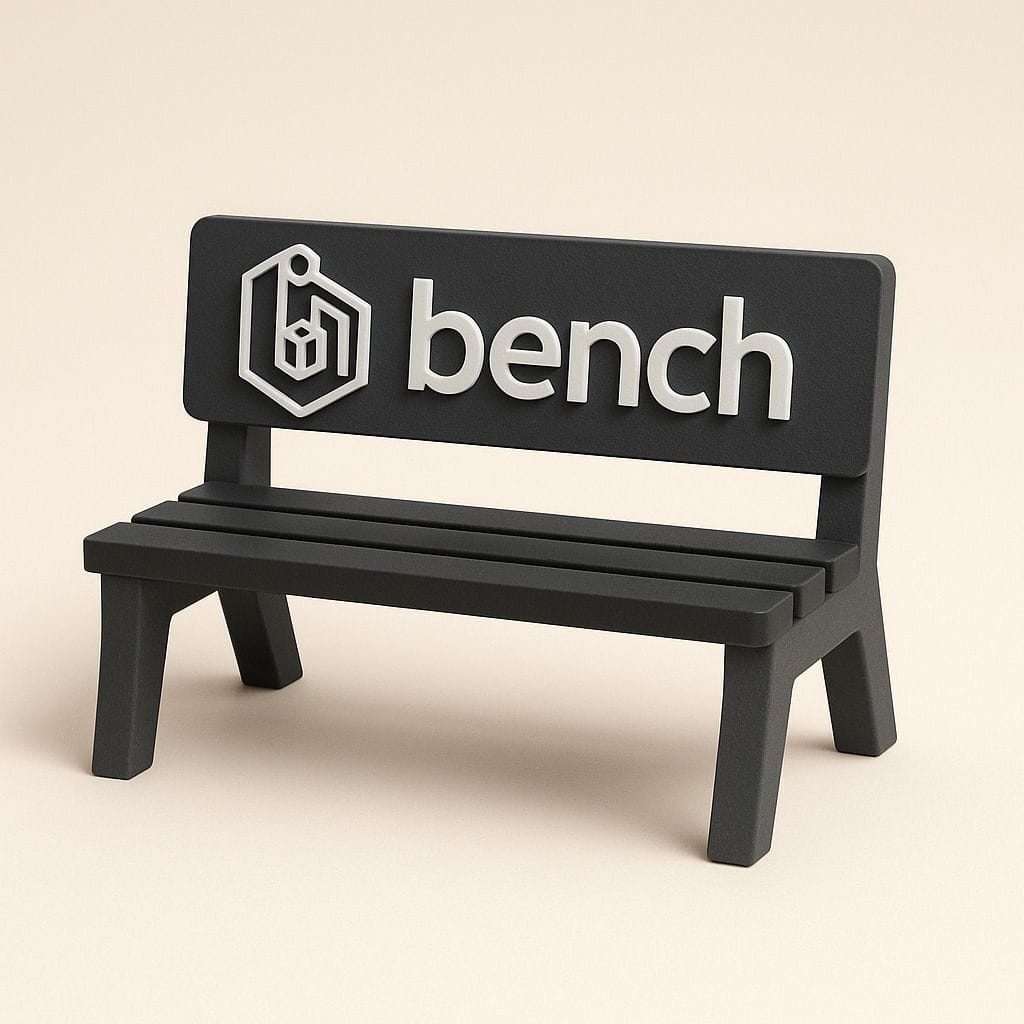
Instead of spending days building rough CAD concepts upfront, we could iterate visually at high speed:
- exploring proportions
- testing stylistic directions
- refining branding details
- experimenting with materials and finishes
- validating the overall feel of the object
Once we landed on a direction everyone liked, we generated an STL model based on the approved concept geometry.
From there, we reverse engineered the STL into a fully editable STEP file so the design could move into proper engineering and manufacturing workflows.
That transition from:
AI-generated imagery → STL geometry → reverse engineered STEP CAD
became a surprisingly effective pipeline for moving quickly from concept to manufacturable product.
It also highlighted something we think is becoming increasingly important:
AI tools are becoming incredibly useful for accelerating communication and visual alignment early in product development.
The challenge wasn’t simply creating a miniature bench.
It needed to:
- feel recognisable immediately
- work as a physical desk object
- capture the visual identity of the company
- print reliably and repeatedly
- be manufacturable in small batches
As the design evolved, we moved from concept exploration into CAD refinement and print testing.
Because additive manufacturing allows rapid iteration, we were able to prototype, adjust proportions, test fitment, and refine details extremely quickly throughout development.
That speed of iteration is one of the biggest advantages of modern digital manufacturing workflows.
Especially for startups and early-stage companies, being able to move from concept to physical object quickly opens up a huge amount of creative flexibility.
Designing for Manufacturing
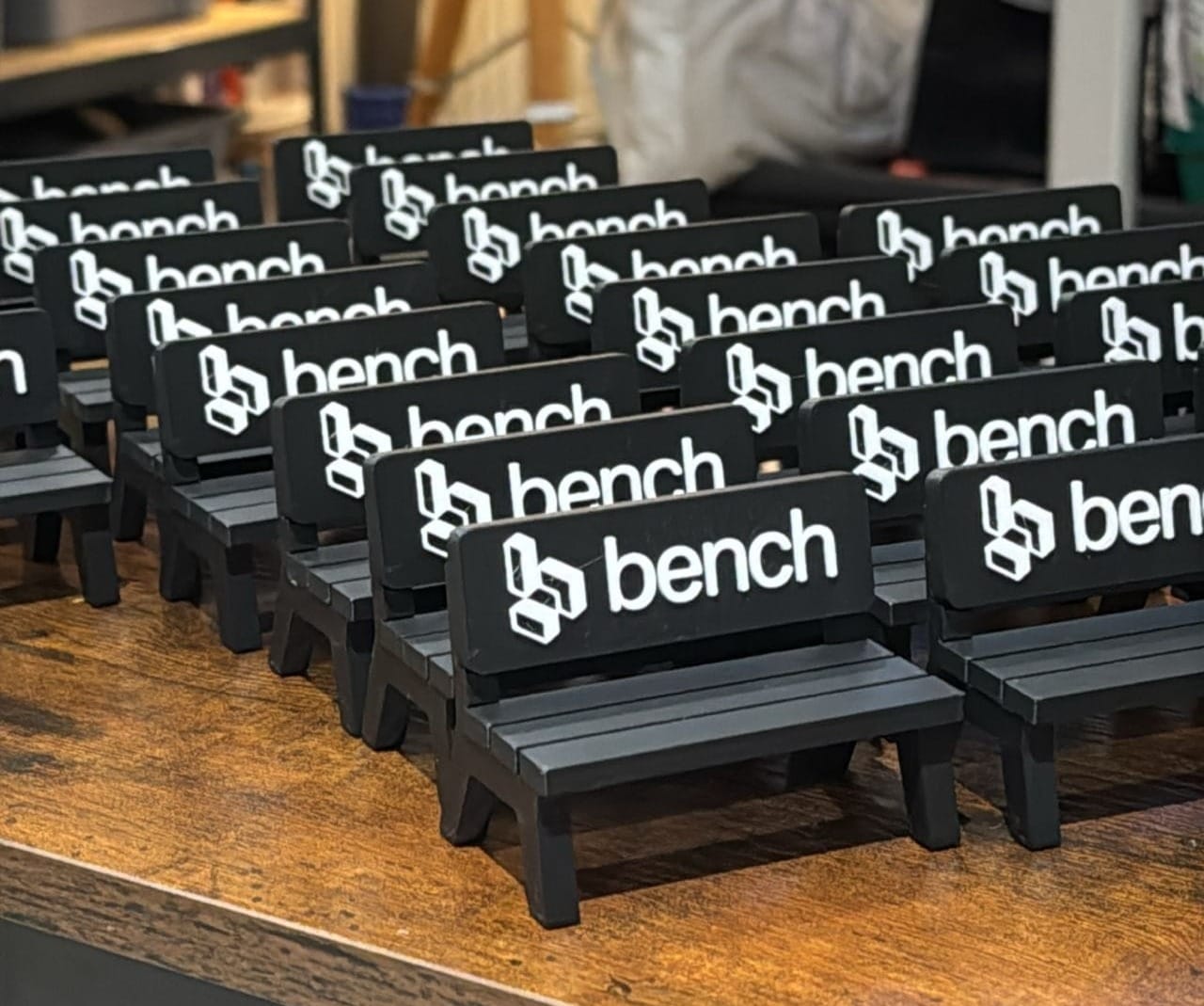
One of the realities of additive manufacturing is that designing something digitally is only one part of the process.
The object also needs to work physically.
Once the STEP geometry was finalised, we began refining the design specifically for manufacturing and assembly.
Throughout development we refined:
- proportions
- structural strength
- print orientation
- assembly methods
- surface finish
- production repeatability
We also developed assembly jigs during production to help improve consistency and alignment across multiple units.
That part of the process is often invisible in finished projects, but it’s a huge part of turning a one-off idea into something that can be reliably reproduced.
The final pieces were produced through additive manufacturing and assembled in batches before being prepared for delivery.
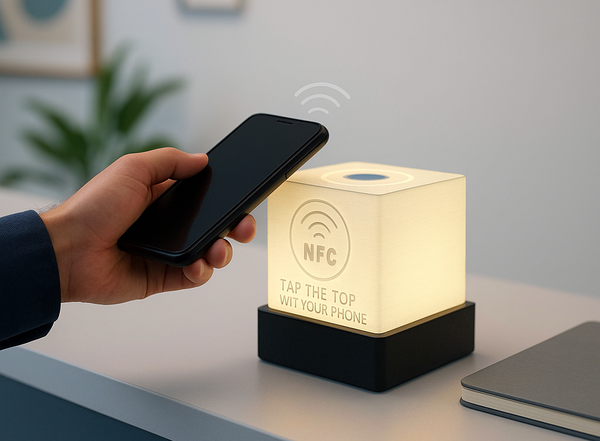
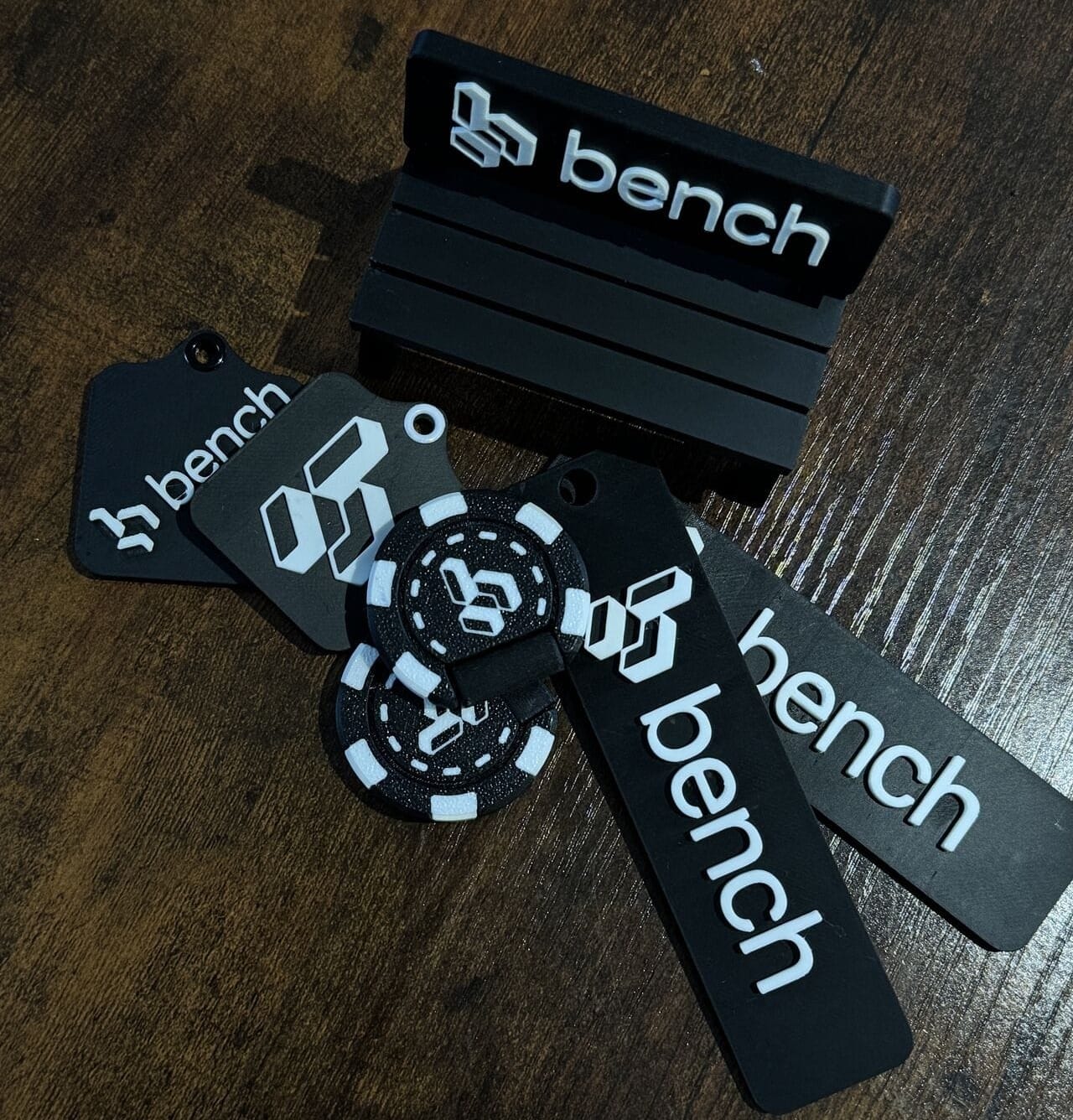
Alongside the benches themselves, we also produced supporting NFC-enabled conference tags and additional branded objects connected to the wider project.
More Than a Promotional Object
What made this project interesting to us was that it highlighted something we think physical products still do extremely well:
They create presence.
In a world where most communication happens digitally, there’s something surprisingly powerful about creating an object people can physically hold, place on a desk, interact with, and associate with a specific moment in time.
Especially for startups.
Early-stage companies often move incredibly quickly.
Teams change.
Products evolve.
Ideas shift direction.
Physical objects can act almost like snapshots of those moments — small artefacts representing a company during a particular stage of its journey.
That’s part of what made this project enjoyable to work on.
It wasn’t simply about manufacturing a model.
It was about creating something tangible around a company that is itself building new tools and workflows for the future.
Reflections
Projects like this continue to reinforce something we think about often at Stellerworks:
Modern manufacturing tools are allowing smaller teams to create increasingly personalised, experimental, and meaningful physical products without the traditional barriers of tooling or mass production.
A few years ago, creating custom branded objects in small quantities would have been slow, expensive, or impractical.
Now, workflows involving AI-generated concepts, CAD reconstruction, rapid prototyping, additive manufacturing, and digital fabrication make that process dramatically more accessible and adaptable.
What excites us most is how these tools are beginning to blend together.
The ability to move from an AI-generated visual concept, into editable engineering geometry, and then into physical production within a short timeframe would have felt unrealistic not long ago.
That shift is still early.
And honestly, that’s a large part of why we find this space so exciting to work within.
The final benches may have been small objects.
But for us, the project represented something much larger:
The growing ability for small teams to move quickly from idea to physical reality.