Not Just A Potato

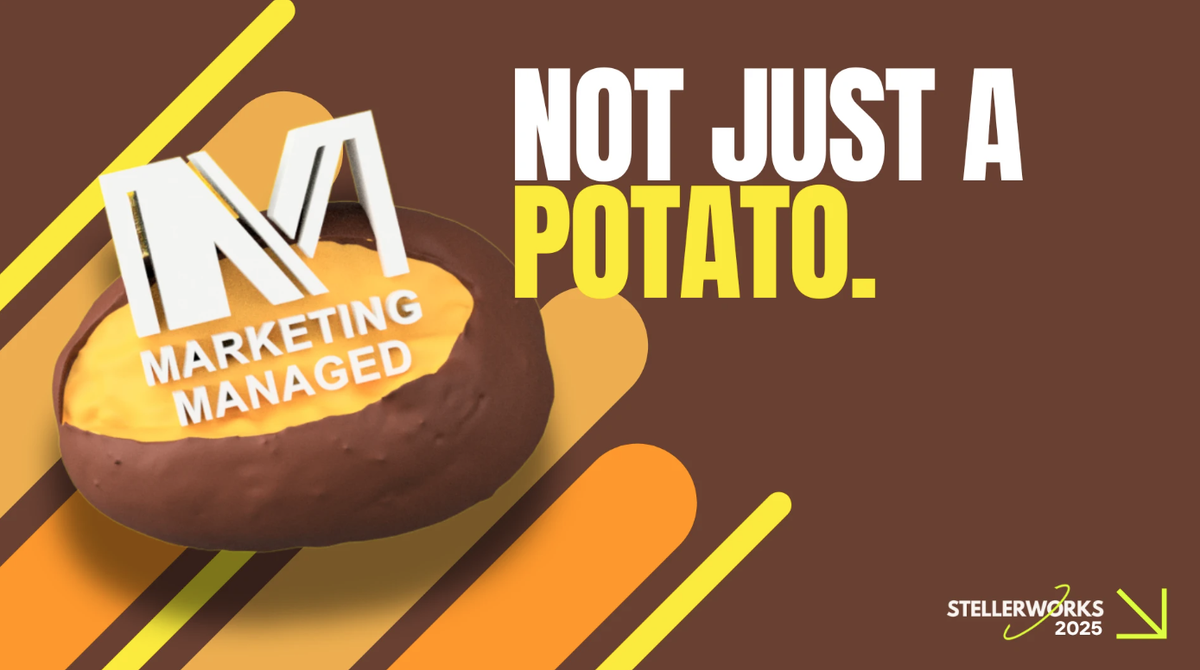
When Marketing Managed first approached us with the idea, the reaction was probably the same one most people would have had:
“Wait… you want us to make a potato?”
But underneath the humor and absurdity of the idea was actually a very interesting creative challenge.
The goal wasn’t simply to produce a branded object for an expo booth.
The goal was to create something physical that would immediately grab attention, spark curiosity, and become a natural conversation starter within a crowded exhibition environment.
Something memorable.
Something people would stop and interact with.
And strangely enough, a potato turned out to be a surprisingly effective solution.
The Idea
The concept centered around creating a realistic, true-to-scale baked potato that incorporated Marketing Managed’s branding directly into the object itself.
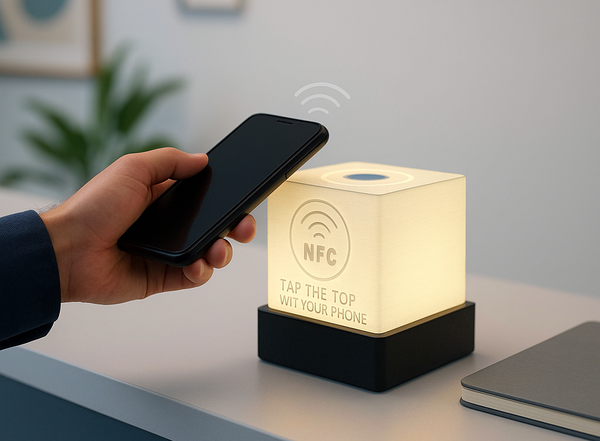
The piece would also contain an embedded NFC chip, allowing visitors to tap the model with their phone and instantly access digital content through a custom URL.
Part branded display piece.
Part conversation starter.
Part interactive marketing object.
From the beginning, we also saw the project as an opportunity to experiment with emerging AI-assisted design workflows within the product development process.
Check Out the Behance Project
From AI Image to Physical Object
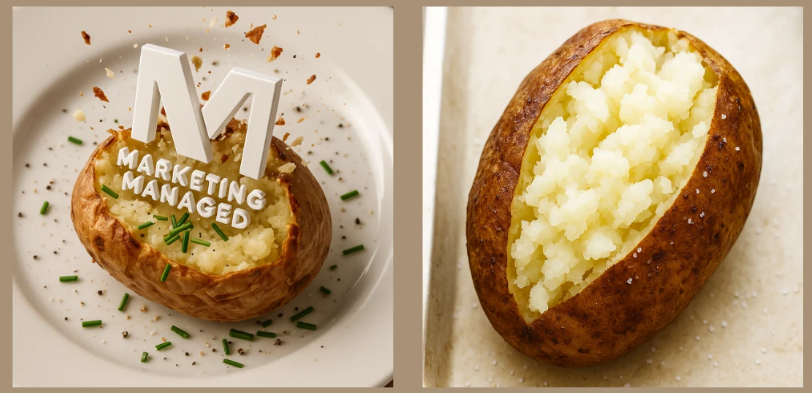
The project began with an AI-generated concept image supplied by the client.
Rather than starting with traditional sketches or manually modelling the concept from scratch, we explored whether modern image-to-3D workflows could accelerate the creative process and help bridge the gap between concept art and physical manufacturing.
Initially, the generated image included embedded text and branding directly within the potato itself.
While visually interesting, this created problems during the AI-to-3D conversion stage, producing geometry that struggled to translate cleanly into a workable mesh.
So the concept had to evolve.
We regenerated the image without lettering in order to create a cleaner and more manufacturable base object.
That second iteration worked far better.
The resulting 3D mesh was rough, imperfect, and required significant refinement — but importantly, it gave us a surprisingly solid foundation to build from.
That stage alone was fascinating to explore.
Not because AI perfectly solved the problem, but because it dramatically accelerated the experimentation phase.
Instead of spending days manually building initial forms, we were able to rapidly test visual directions, generate concepts, and move into physical development much faster than traditional workflows would normally allow.
Refinement & Manufacturing
Once the base mesh had been generated, the project moved into a more traditional refinement and engineering workflow.
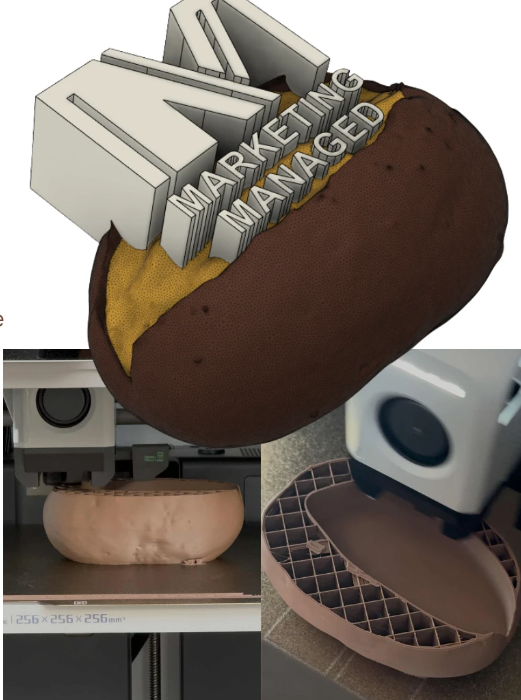
Using Meshmixer, we cleaned up geometry, refined surfaces, and removed unwanted artefacts generated during the AI conversion process.
From there, the project moved into Fusion 360, where custom branding and lettering were modelled, aligned, and integrated directly into the potato geometry.
The final design was then prepared for additive manufacturing.
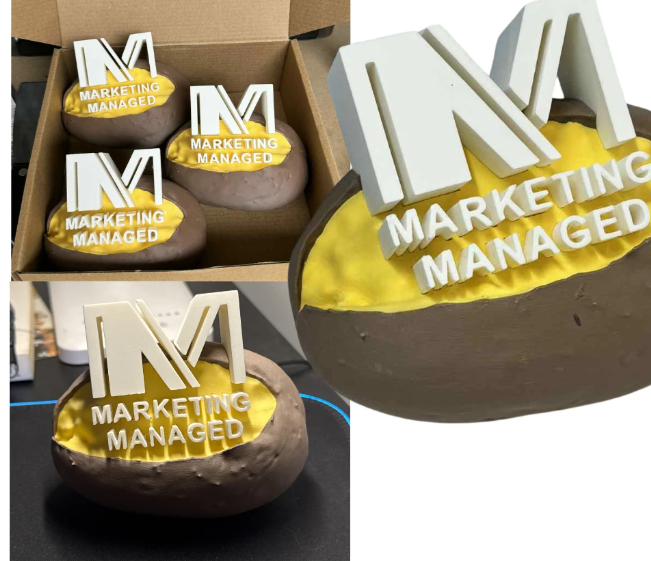
The potato itself was printed using matte brown and yellow PLA to recreate the look of a realistic baked potato, while the branding was produced in white PLA to create strong visual contrast.
An NFC tag was embedded directly into the print, linking the physical object to digital content and adding an interactive layer to the final piece.
One of the most satisfying moments during the project was seeing the object move through multiple completely different mediums:
AI-generated concept → digital mesh → CAD refinement → physical print → interactive object.
That entire workflow still feels genuinely exciting.
The Result
At the expo, the potato did exactly what it was designed to do.
People stopped.
People laughed.
People picked it up.
People asked questions.
And most importantly, people remembered it.
The most common response throughout the event was:
“Wait… is that a potato?”
Exactly the reaction we were aiming for.
Beyond the humor, the project also reinforced something we continue to believe strongly at Stellerworks:
Physical objects create a different kind of engagement.
Especially when they combine curiosity, tactility, storytelling, and interaction in a way that purely digital experiences often struggle to replicate.
Reflections
This project ended up becoming far more than just a novelty object.
For us, it became a small but interesting example of how rapidly modern creative and engineering workflows are evolving.
AI-assisted ideation.
Image-to-3D generation.
Digital refinement.
Rapid prototyping.
Embedded interaction.
Additive manufacturing.
All combined into a workflow that allowed a small team to move from concept to finished physical object remarkably quickly.
The technology is still early.
The workflows are still imperfect.
But that’s part of what makes this space so interesting to explore right now.
Projects like this continue to reinforce something we think about often at Stellerworks:
The boundaries between engineering, design, manufacturing, software, branding, and interaction are becoming increasingly blurred.
And honestly, we think that opens up some very exciting possibilities.
Check out the Behance project